Ingredients8 min read
Salicylic acid vs PHA: which exfoliant for Pakistani skin
The wrong exfoliant in Pakistani summer makes skin worse, not better. Here's how the two acids work, when to choose each, and how to combine them.
Most international skincare advice tells you to use glycolic acid (an AHA) for exfoliation. In Pakistani summer that's a mistake — glycolic acid causes photosensitivity, and you're already getting more UV than the formulation was tested under.
The two acids that work for our climate are salicylic acid (BHA) and polyhydroxy acid (PHA). They do different jobs. Most adults need both.
What each acid actually does
Salicylic acid (BHA)
Salicylic acid is lipophilic — fat-soluble. It penetrates the oily contents of pores and dissolves the keratin plug from inside. It's the only acid that reaches deep into pores, which is why it's the gold-standard active for blackheads, congestion, and active acne.
It also has mild anti-inflammatory properties (it's structurally related to aspirin). For active breakouts, this matters: it both clears the pore and reduces the redness around it.
Read more on how salicylic acid works.
Polyhydroxy acid (PHA)
PHA — specifically gluconolactone — is hydrophilic and has a much larger molecule than glycolic or lactic acid. It works on the surface of the skin, dissolving the bonds between dead surface cells without penetrating into living tissue.
The bigger molecule is why PHA is gentler. It can't reach the receptors that trigger irritation, and it's a humectant in its own right — it pulls moisture into the upper skin layers as it exfoliates. The exfoliation feels hydrating, not stripping.
Critically for Pakistani climate: PHA does not cause photosensitivity. AHAs (glycolic, lactic) thin the stratum corneum, making skin more vulnerable to UV damage. PHA exfoliates without thinning. You can use it in the morning under SPF without compromising your sun protection.
Read more on PHA / gluconolactone.
When to choose each
Use salicylic acid if: - You get blackheads, especially on the nose, chin, and forehead - You have active acne or persistent post-acne marks - Your skin is oily-to-combination - You feel "congestion" — pores that look full or grainy
Use PHA if: - Your skin is sensitive or reactive (it stings on glycolic) - You have rosacea or rosacea-adjacent flushing - You want brightness + smoothness without the irritation of stronger acids - You're new to acid exfoliation and want a low-risk starting point - You're pregnant or breastfeeding (PHA is generally considered safe; check with your dermatologist)
How we combine them
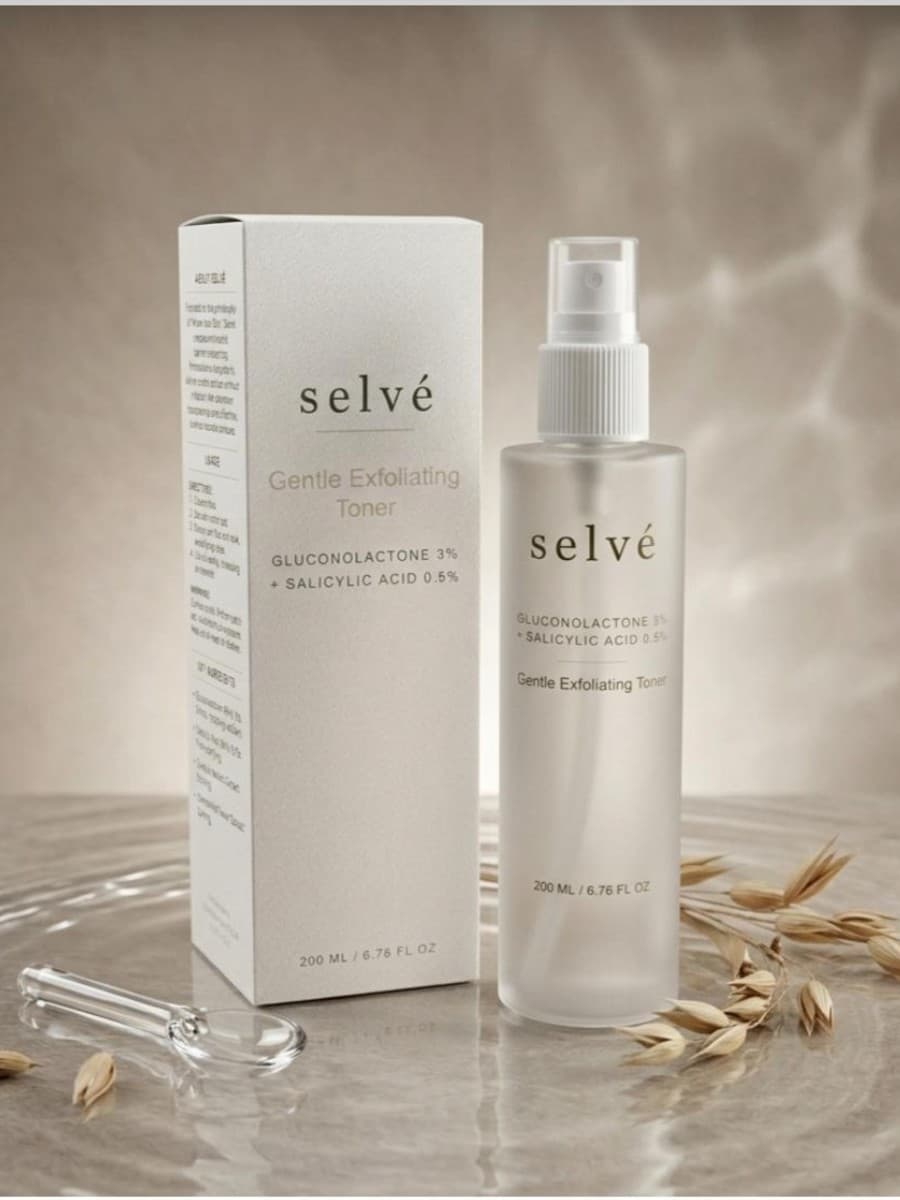
Our PHA toner uses 3% gluconolactone (PHA) + 0.5% salicylic acid (BHA) + 2% niacinamide. This is a low-irritation combination because:
- PHA at 3% is a high-end clinical dose for surface exfoliation
- Salicylic acid at 0.5% is the lowest effective concentration (US OTC max is 2%; we deliberately use lower for daily use)
- Niacinamide at 2% suppresses any inflammation the acids might cause and provides the brightness layer
Used once daily in the evening, this is enough exfoliation for most adults. If you have acne-prone skin, you can also use our gentle cleanser which contains 0.5% salicylic acid for a slow, all-day exposure during the cleanse step.
What not to do
- Don't layer multiple acid products. A toner with PHA + a serum with glycolic + a peel with lactic = damaged barrier within a week. Pick one acid product per day.
- Don't use AHAs (glycolic, lactic, mandelic) without daily SPF 50. They photosensitise.
- Don't exfoliate every day if your skin is reactive. PHA at 3% daily is fine for most; reactive skin should start every other day.
- Don't combine with retinol on the same night. Use them on alternating nights until you know how your skin responds.
A reasonable progression
Week 1: Apply PHA toner every other evening. Watch for any flushing or tightness. Week 2: If no irritation, move to nightly. Week 3: If you're acne-prone, swap your morning cleanser to one with salicylic acid. Weeks 4–8: Sustained daily use. Pigmentation should visibly fade. Texture should smooth.
If you over-exfoliate (skin feels tight, looks shiny but feels dry, develops small flaky patches), pause acids for 7 days and run a barrier-repair routine.
The takeaway
For most Pakistani adults — especially in summer — PHA is the safer base layer and salicylic acid is the targeted treatment for pore concerns. Stack them carefully, never with AHAs, always with SPF.